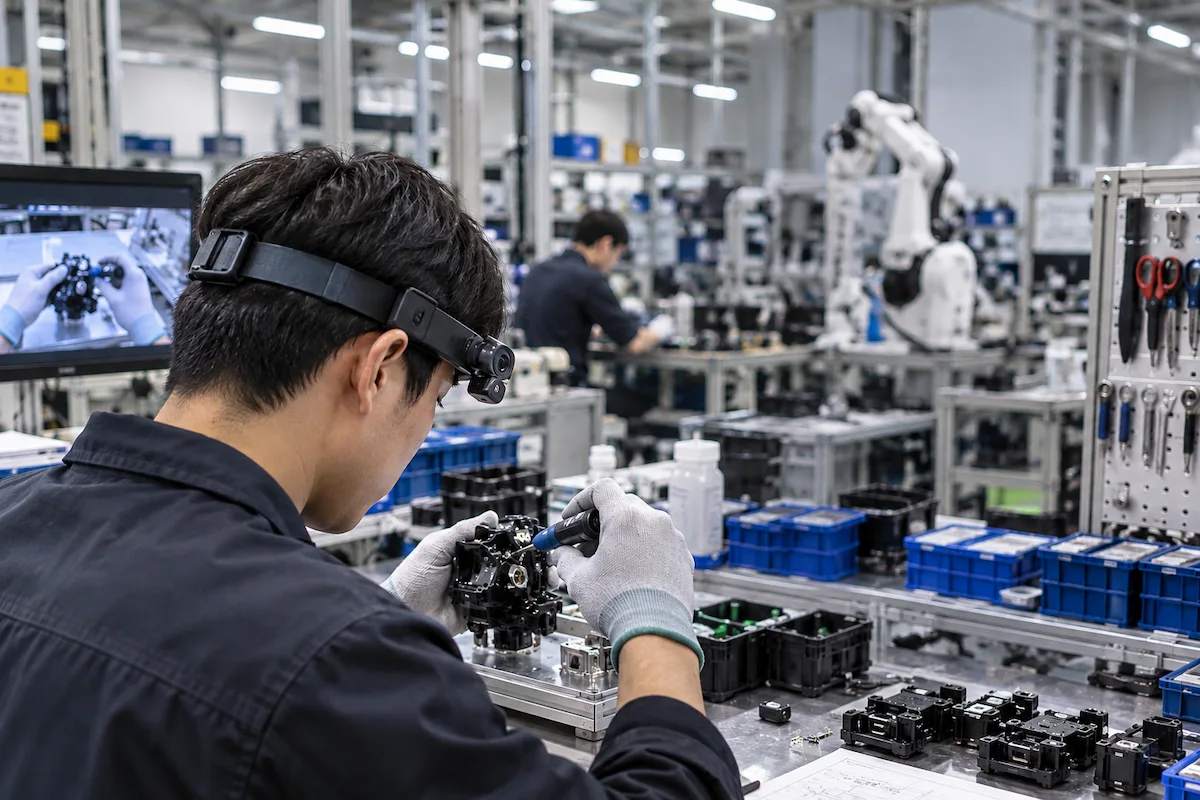
Egocentric industrial workflows and real human task execution.
Origin Data Lab designs and operates real-world data collection programs around the tasks, environments, interactions, viewpoints, sensors, metadata, and quality criteria required by Physical AI and robotics teams.
Real-world collection is designed around operational workflows, human behavior, task-centered viewpoints, spatial context, and the sensor signals required by the target system.
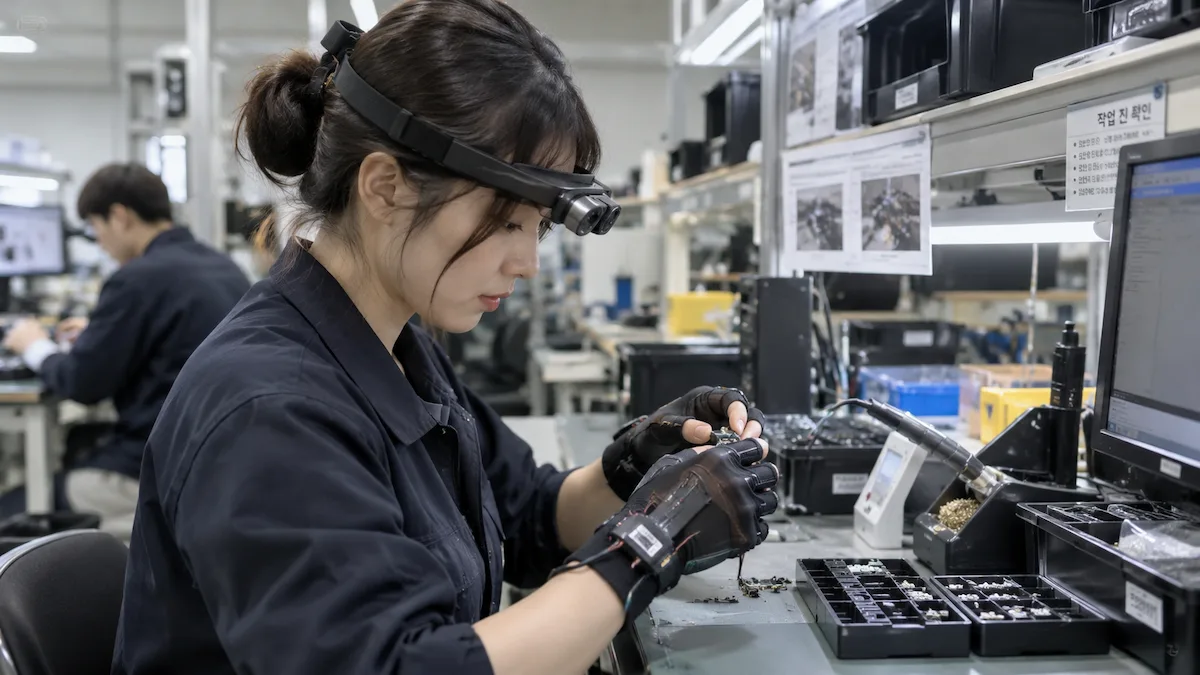
Training and evaluating systems that act in the physical world requires more than generic video. Collection design must account for the target task, operator behavior, viewpoint, object interaction, motion, sensors, synchronization, environmental diversity, and downstream delivery schema.
Capture real human work, hand-object interaction, tool use, bimanual workflows, sequential tasks, and environment-specific behavior.
Configure video, IMU, audio, timestamps, device context, stereo, wearable, spatial, or robotics-linked signals according to project needs.
Produce structured metadata, quality records, manifests, documentation, traceability, and delivery packages aligned to the buyer's pipeline.
Origin Data Lab is not limited to one camera or one modality. Capture architecture is configured around the required signal, environment, hardware, synchronization, and acceptance criteria.
First-person human activity, hand-object interaction, tool use, bimanual work, and task-centered context.
Project-configurable synchronized left-right or multi-camera capture for spatial perception and viewpoint diversity.
Project-defined wearable sensing, motion signals, device IMU, and task-aligned sensor streams.
Depth-aware and spatial capture can be integrated when project hardware and target model requirements call for it.
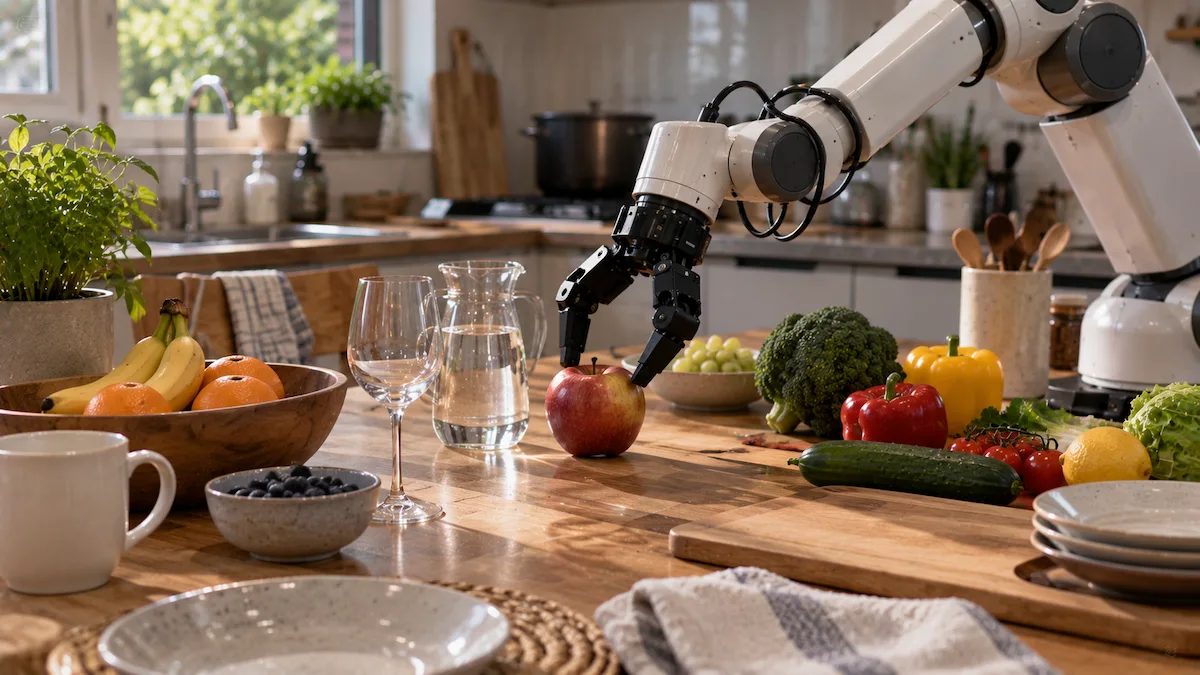
Customer-provided robotics systems can be incorporated for observation, state, action, trajectory, instruction, or robot-linked sensor data.
Standard video, audio, timestamps, GPS where applicable, device information, task context, and structured metadata.
Programs can be scoped around the operational environments, participants, workflows, objects, tools, and regional conditions relevant to the target model.
Assembly, maintenance, production handling, tools, deformable materials, and repetitive industrial workflows.
Picking, sorting, scanning, packing, movement, inventory interaction, and operational logistics tasks.
Cleaning, housekeeping, organization, object handling, preparation, and service-oriented tasks.
Preparation, processing, cutting, wrapping, handling, inspection, and other skilled manual workflows.
Retail, hospitality, facilities, kitchens, service spaces, and real operational workplaces.
Roads, pedestrian environments, traffic, transport, outdoor work, and perception-oriented field collection.
Each project begins with the missing condition or target capability, not with a fixed dataset catalog.
Identify target tasks, environments, participants, viewpoints, sensors, metadata, quality rules, and delivery requirements.
Build the practical field protocol, capture architecture, instructions, validation rules, and collection workflow.
Run a focused batch to verify technical feasibility, field execution, metadata integrity, and acceptance criteria.
Expand validated collection by scenario, participant, environment, geography, volume, or delivery cadence.
Review technical compliance, metadata completeness, source traceability, exceptions, and recapture requirements.
Deliver structured media, sensor data, metadata, manifests, QA records, schemas, and documentation.
Instead of forcing a project into a fixed dataset catalog, we translate the missing capability into a practical capture, field-production, validation, and delivery architecture.
Tasks, environments, viewpoints, participant profiles, hardware, sensors, metadata, and acceptance criteria are defined around the target model requirement.
Collection protocols, operator instructions, technical checks, QC, exception handling, recapture, provenance, and delivery are managed as one production workflow.
Structured metadata, sensor context, validation records, exception handling, manifests, and project-defined delivery schemas are prepared for downstream model and robotics workflows.
South Korea can support high-value industrial, service, food-production, skilled-work, household, and technology-centered environments. Additional production locations can be evaluated according to project scope, operational feasibility, and required volume.
Programs can include egocentric human demonstration, standard video, stereo or multi-view capture, wearable sensing, IMU, audio, metadata, RGB-D or spatial capture, and robotics-linked data where supported by the project hardware.
Yes. Capture architecture can be configured around the task, environment, viewpoint, sensor configuration, synchronization, participant profile, metadata schema, and acceptance criteria.
Yes. A focused pilot can validate capture feasibility, field instructions, sensor integrity, metadata, quality rules, and delivery format before scaling.
Yes. Programs can be developed for approved industrial, service, household, skilled-work, food-production, technology, and other real-world environments in South Korea.
Each program focuses on a different technical or regional requirement, from robotics learning and first-person human demonstration to multimodal sensing and South Korea field collection.
Human demonstrations, manipulation, perception, VLA, embodied learning, and real-world robotics workflows.
First-person tasks, hands, tools, objects, skilled work, and sequential human workflows.
Video, IMU, audio, timestamps, wearable sensing, spatial signals, synchronization, and structured metadata.
Region-specific industrial, skilled-work, service, food-production, household, and technology environments.
A short description of the target task, environment, viewpoint, sensor requirements, metadata, and expected delivery format is enough to begin an initial feasibility review.