Data Governance & Transparency

An operational overview of how Origin Data Lab governs custom real-world AI data production, including managed field collection, provenance, privacy controls, retention, licensing, and delivery responsibilities.

This page provides general information about our operational practices. Binding terms are defined in the applicable agreement, project scope, and delivery documentation.

Data Governance Framework

Operational controls used to document field collection, define delivery scope, preserve dataset traceability, and establish responsibility boundaries for custom dataset projects.

Project Governance Controls

Managed Field Collection Governance

Licensing, permitted use, delivery rights, and restrictions are defined in the applicable proposal, agreement, or dataset documentation.

  • Governance controls aligned with buyer-defined model gaps, operating conditions, and project requirements
  • Evaluation, research, commercial, or other approved use defined per engagement
  • Redistribution, resale, public-release conditions, and delivery traceability documented where applicable

Delivery Scope &
Permitted Use

Licensing, permitted use, delivery rights, and restrictions are defined in the applicable proposal, agreement, or dataset documentation.

  • Evaluation, research, commercial, or other approved use defined per engagement
  • Redistribution, resale, and public-release conditions documented where applicable
  • Dataset and segment identifiers retained to support delivery traceability

Operational Traceability

Capture Authorization Flow

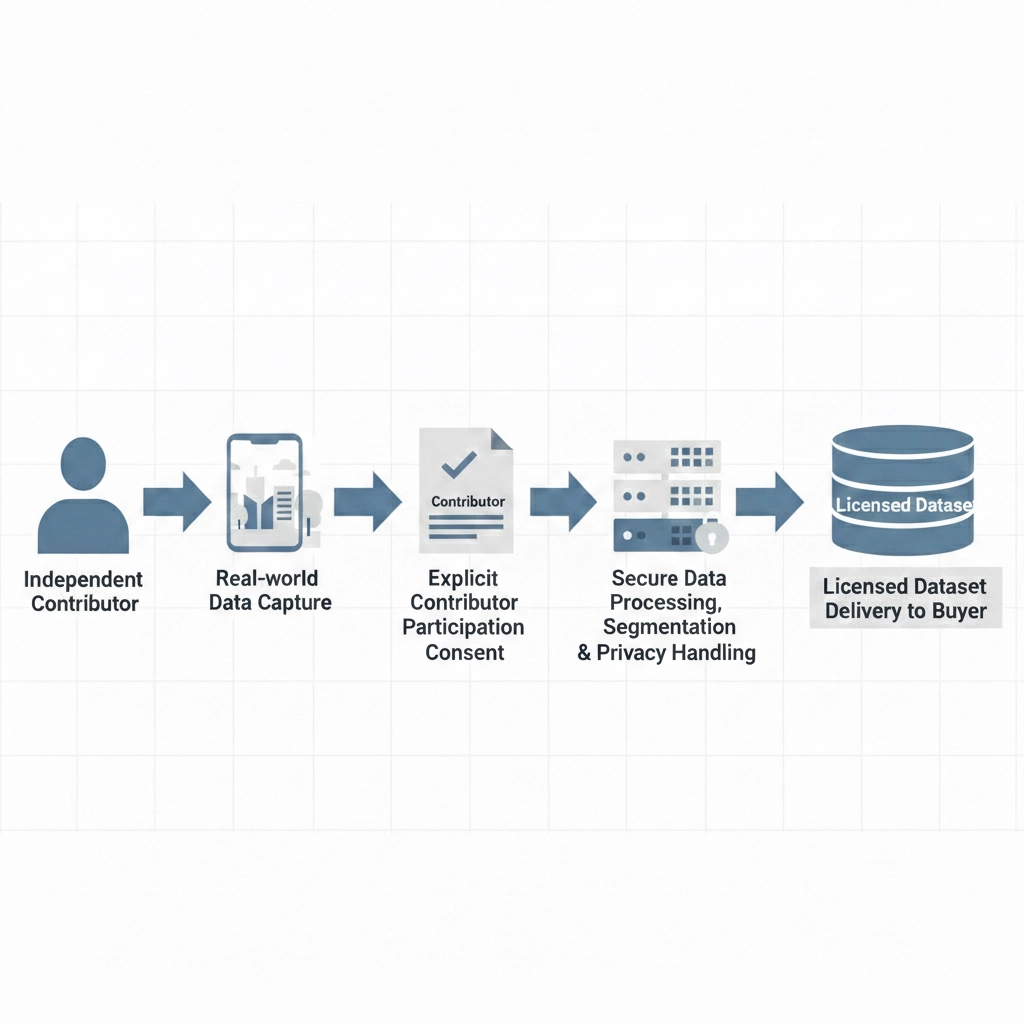
Operational workflow showing field mission assignment, capture, upload, verification, and segment acceptance

A documented workflow connects field mission assignment, capture, upload, technical verification, and segment review.

  • Field-operator authorization and mission context recorded during collection
  • Capture and upload metadata retained for operational traceability
  • Segment-level acceptance, rejection, or review outcomes recorded

Permitted & Restricted Use

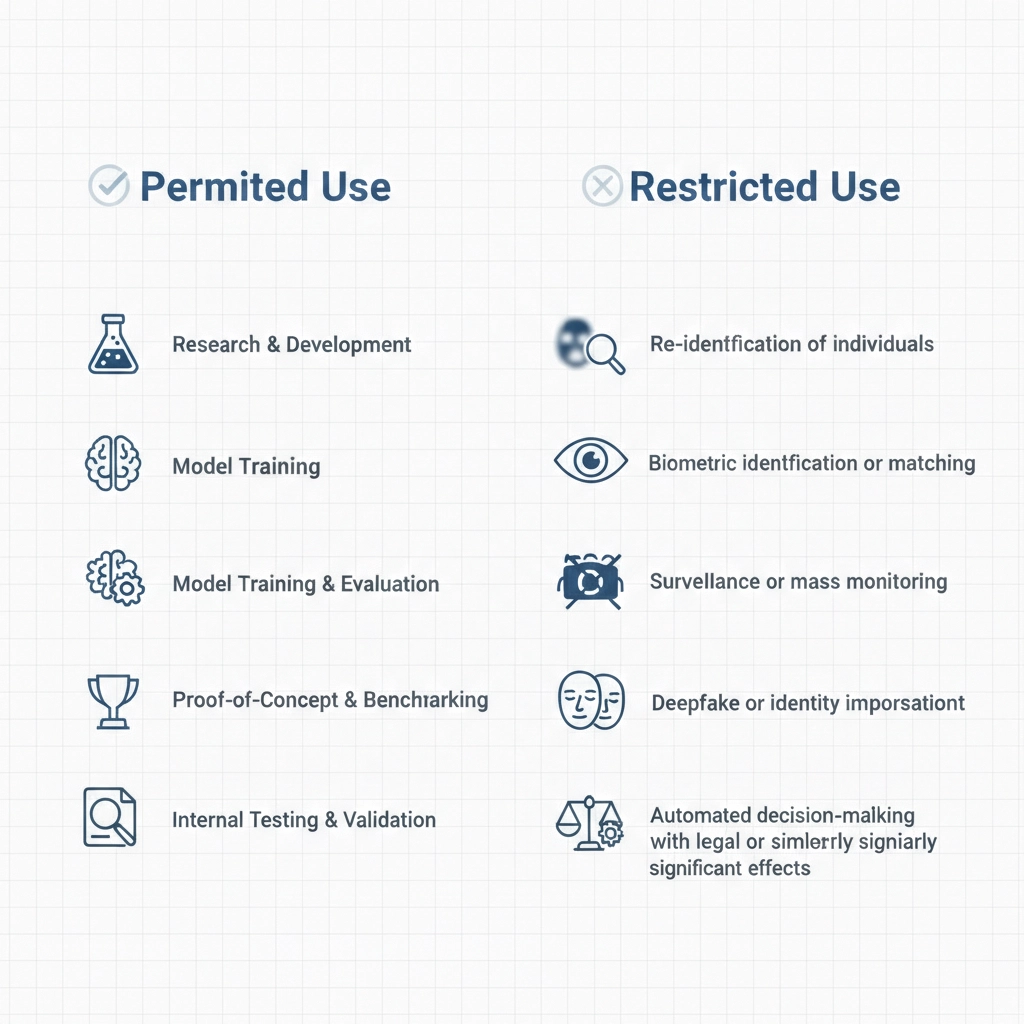
Dataset usage diagram distinguishing approved uses from restricted redistribution, resale, and public release

Project documentation distinguishes approved uses from restricted activities according to the agreed delivery scope.

  • Approved uses may include model training, evaluation, or internal benchmarking
  • Redistribution, resale, sublicensing, or public release require explicit authorization
  • Final rights and restrictions are defined by the applicable agreement

Responsibility Boundary

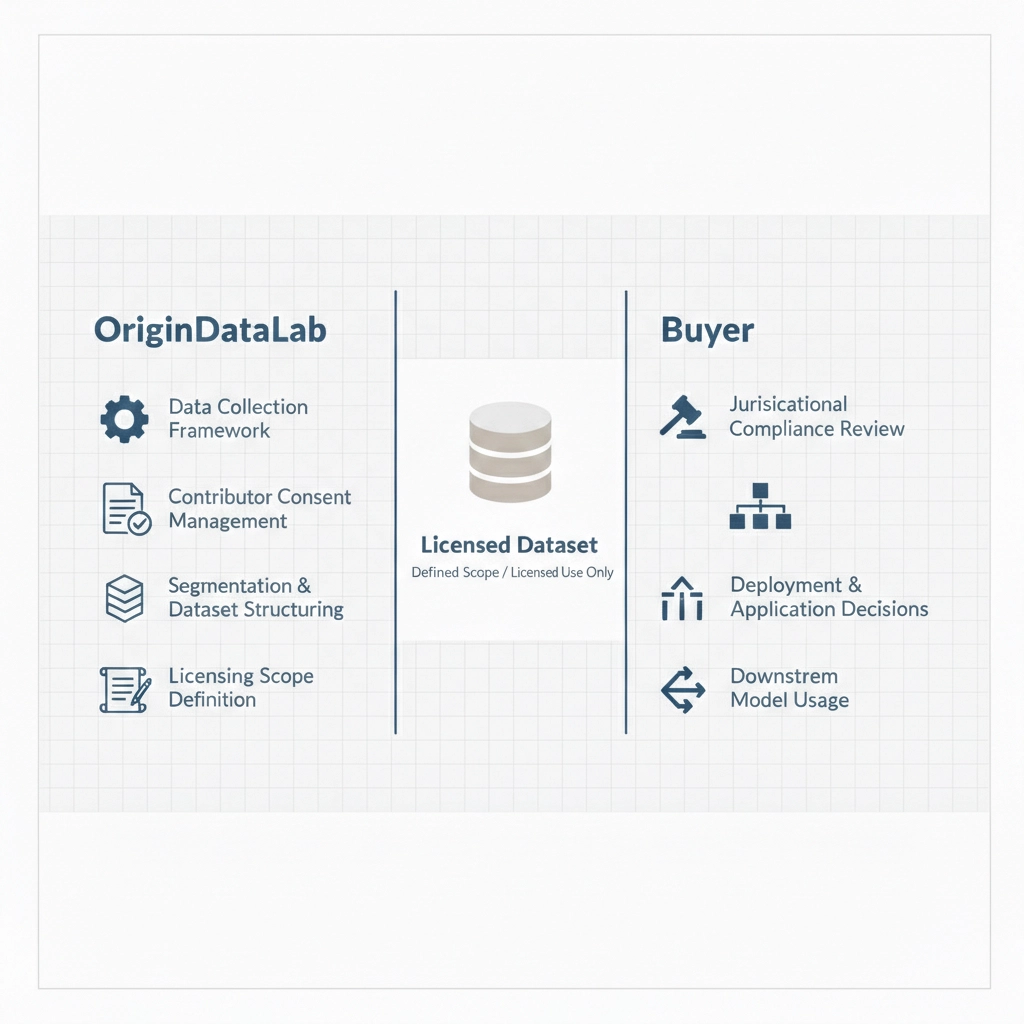
Responsibility boundary diagram separating Origin Data Lab delivery responsibilities from customer-controlled downstream use

Project documentation separates our collection and delivery responsibilities from customer-controlled downstream processing and model use.

  • Origin Data Lab documents collection provenance, metadata, quality review, and delivery integrity
  • Customers control their training environment, downstream processing, and model deployment
  • Final obligations and remedies are defined in the applicable contract

Governance Overview Infographics

Visual summaries of our dataset handling workflow, privacy controls, traceability practices, and project responsibility boundaries for buyer, legal, and procurement review.

Real-World Data Governance Lifecycle
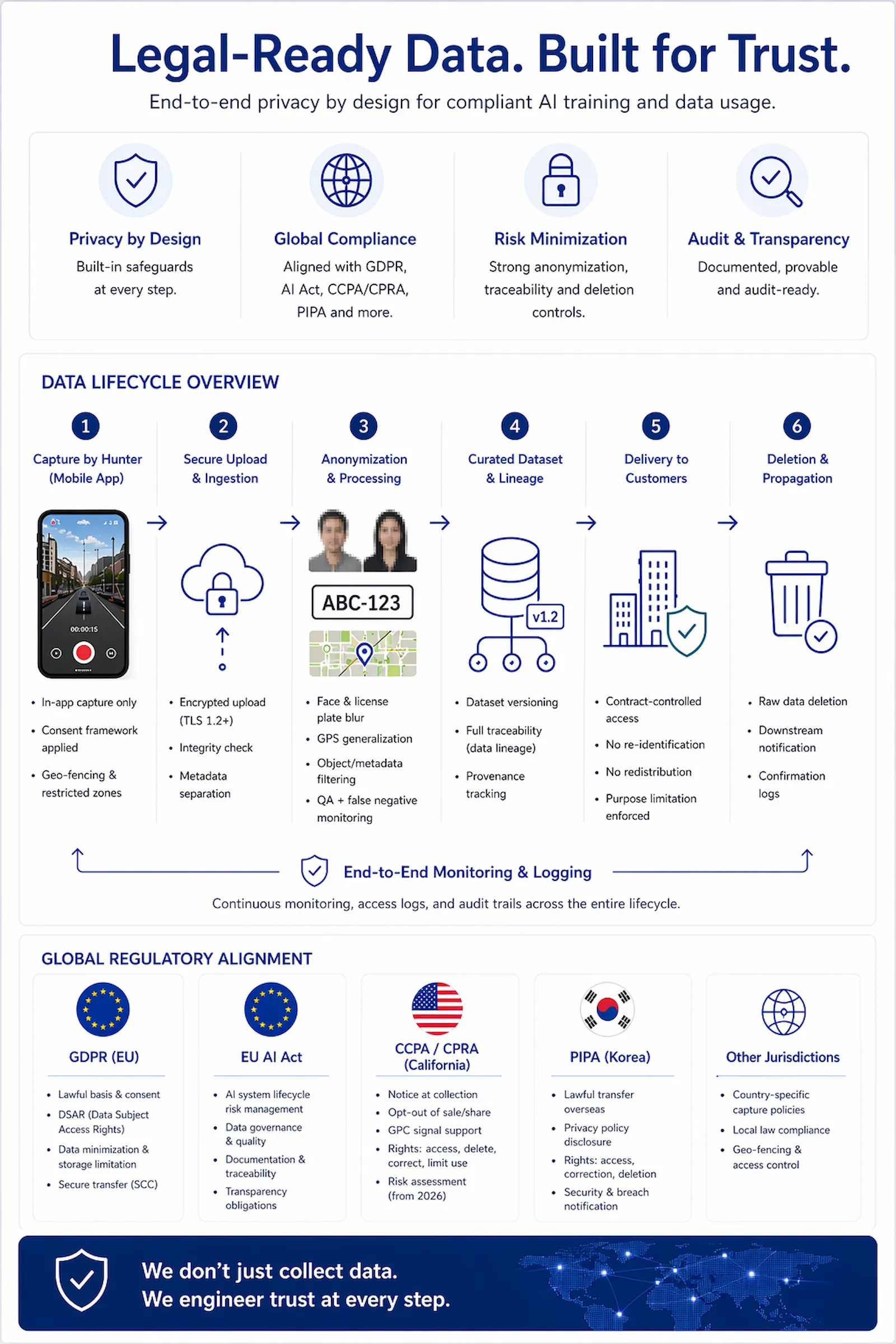
Infographic showing the Origin Data Lab workflow from managed field collection and upload verification to privacy review, quality control, and controlled dataset delivery

A high-level overview of how managed field collection, upload verification, privacy review, quality control, traceability, and controlled delivery connect across a custom dataset project.
View Combined Governance Overview →

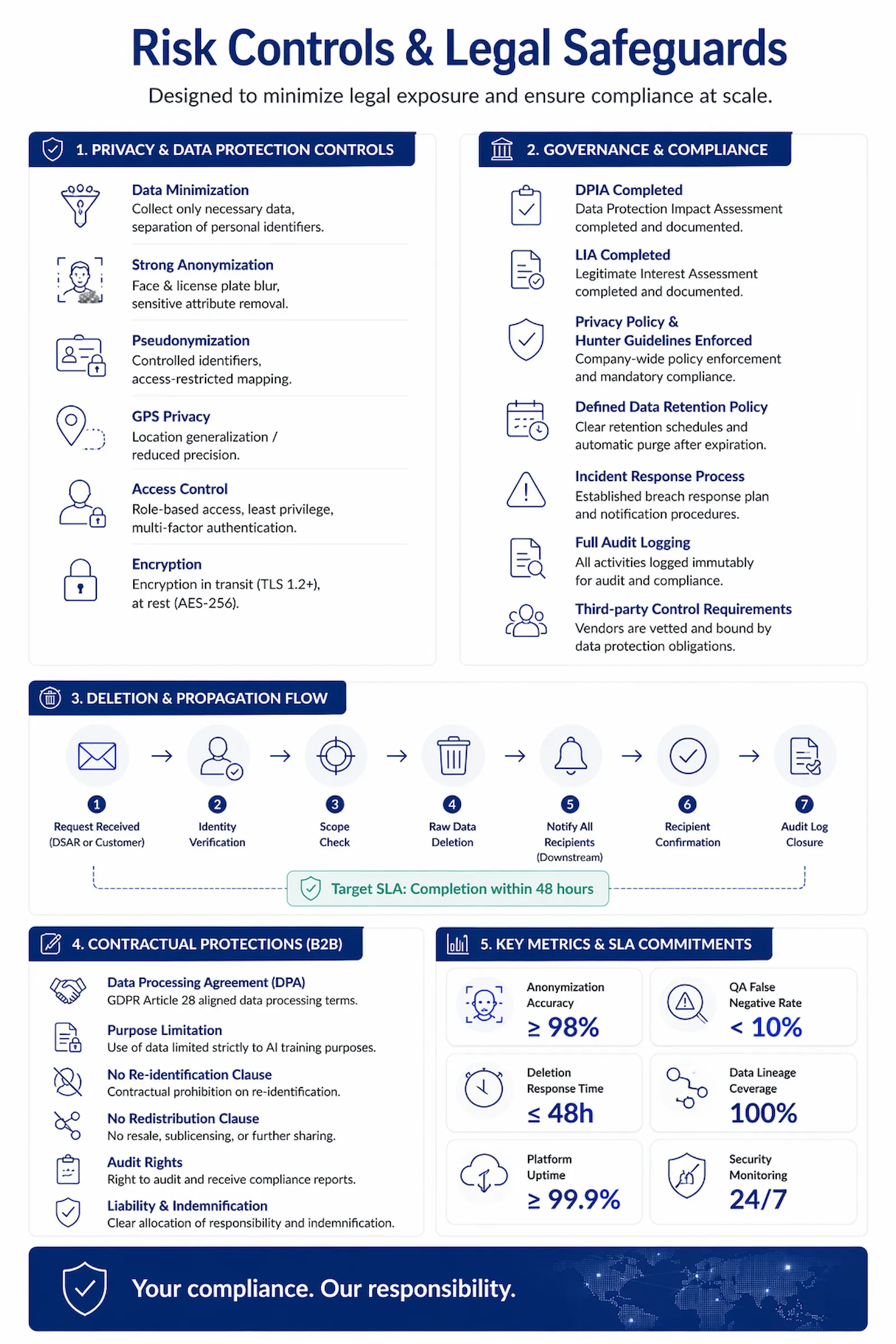
Operational Risk Controls

Infographic illustrating operational controls for data minimization, privacy transformation, access management, review outcomes, deletion handling, and contractual delivery boundaries

A practical overview of operational controls that may be applied to data minimization, privacy transformation, access management, review outcomes, deletion handling, and contractual delivery boundaries.

View Governance Overview →

Policies & Project Documentation

Review the public policies and operational guidance currently available. Additional project-specific documentation may be provided during formal buyer qualification or contracting.

View Current Website Policy →

Depending on the engagement, relevant licensing terms, statements of work, data-processing provisions, retention requirements, security information, and delivery specifications may be documented separately.

Buyer Review FAQ

Practical information for procurement, legal, privacy, and compliance teams reviewing a potential custom dataset engagement.

Where is the data collected?

Origin Data Lab conducts managed field collection in publicly accessible road, traffic, market, and urban environments according to defined capture missions and project requirements.

How are faces and license plates handled?

Privacy-processing requirements are defined during project scoping. Depending on applicable law, contractual requirements, and approved delivery specifications, relevant identifiers may be masked, filtered, excluded, or otherwise processed before delivery.

Can licensing terms be reviewed before purchase?

Yes. Proposed usage rights, delivery scope, restrictions, and customer responsibilities can be reviewed during buyer qualification and are finalized in the applicable agreement or delivery documentation.

Is a project-specific DPA available?

Where Origin Data Lab processes personal data on behalf of a customer, or where the engagement otherwise requires additional data-processing provisions, an appropriate project-specific document can be discussed during legal and procurement review.

Can provenance and handling documentation be reviewed?

Relevant collection provenance, metadata structure, quality-control procedures, handling records, and governance materials may be shared during formal buyer review, subject to confidentiality and project scope.

Are website summaries legally binding?

No. This page provides a general operational overview. Binding rights, obligations, warranties, restrictions, and remedies are defined in the applicable agreement, statement of work, and delivery documentation.

Data Provenance & Handling FAQ

Operational information for provenance review, privacy assessment, security due diligence, and engineering validation.

How is the data collected?

Data is collected through managed field operations using defined capture missions, mobile recording workflows, and project-specific scene, location, timing, and quality requirements.

How are identifying elements handled?

Faces, license plates, and other potentially identifying elements are reviewed according to the applicable project scope. Where required, they may be masked, filtered, excluded, restricted, or otherwise processed before delivery.

How is raw footage retained?

Raw footage may be retained only for defined quality-control, traceability, security, contractual, or legal purposes. Retention periods and deletion procedures are determined by the applicable project scope, legal requirements, and internal retention controls.

How are sensitive or review-flagged scenes handled?

Content involving minors, vulnerable individuals, medical situations, accidents, private locations, or other sensitive circumstances may be flagged for additional review and may be restricted, excluded, or processed according to policy, legal requirements, and delivery scope.

Can cross-border data handling occur?

Cross-border handling may occur depending on the collection region, hosting environment, customer location, and project requirements. Where regulated personal-data transfers are involved, the applicable safeguards and contractual requirements are identified during project scoping.

What infrastructure and access controls are used?

Data is handled through cloud-based storage and controlled operational workflows. Access, processing, and delivery controls are applied according to assigned roles, project needs, and the technical capabilities available for the engagement.

Discuss governance, privacy, licensing, and delivery requirements for your custom real-world AI data project.

Discuss Your Project Requirements →

Feasibility review, licensing discussion, and custom collection scoping available.